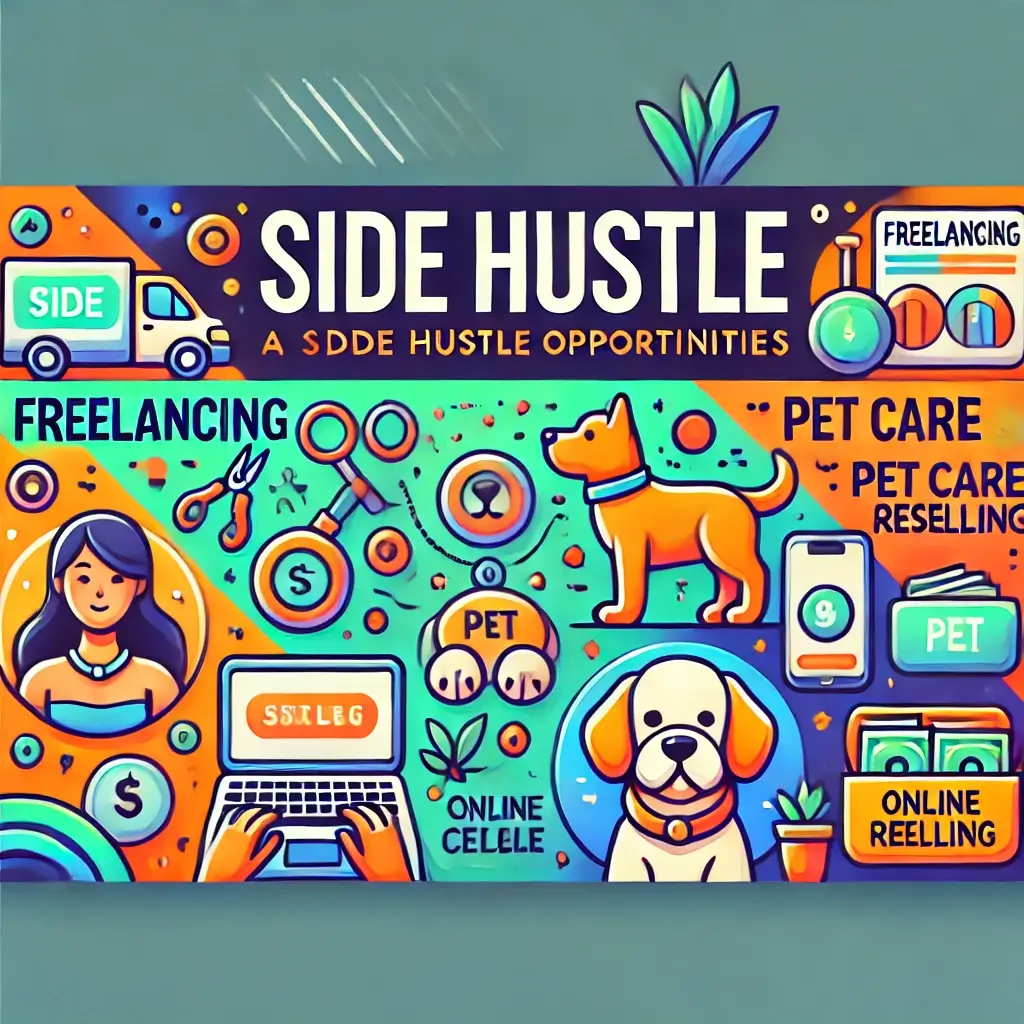
What is a Side Hustle?
A side hustle is a part-time income-generating activity you pursue alongside your primary job, studies, or other commitments. Unlike a full-time job, side hustles offer flexibility in when and how you work, allowing you to set your own schedule and choose your projects or products.
Side hustles can range from freelance services and online businesses to selling products or creating content. They're typically something you do in your spare time—evenings, weekends, or whenever you have availability—and can often be done from home or anywhere with an internet connection.
Many people start side hustles to earn extra income, explore new interests, develop skills, or eventually transition to full-time entrepreneurship. The beauty of side hustles is that they allow you to test business ideas, build income streams, and gain experience while maintaining the security of your primary income source.
Key Takeaway
A side hustle is a flexible, part-time way to earn extra income while maintaining your primary job or commitments. It can be a stepping stone to financial freedom or full-time entrepreneurship.
Why Start a Side Hustle?
Extra Income
Supplement your primary income to pay off debt, save for goals, invest, or improve your lifestyle without waiting for a raise or promotion.
Financial Security
Build multiple income streams to reduce financial risk. If you lose your job or face unexpected expenses, your side hustle provides a safety net.
Skill Development
Learn new skills, explore interests, and gain experience that can advance your career or open new opportunities.
Flexibility
Work on your own schedule, choose your projects, and have control over your time and income potential.
Path to Entrepreneurship
Test business ideas, build a client base, and generate income while maintaining job security. Many successful businesses started as side hustles.
Pursue Passions
Turn hobbies or interests into income. Do work you enjoy while earning money, making it feel less like work.
Featured Side Hustle Articles
Dive deeper into specific side hustle strategies with our in-depth articles covering real examples, step-by-step guides, and proven methods.

Can You Earn Money with Survey Providers and Do They Actually Pay?
A deep dive into the world of survey providers—do they really pay, and are they worth your time?
Read Article→
Earn money with faceless videos
A comprehensive guide on how to make money online with faceless videos and build a passive income stream.
Read Article→
Use Your Native Tongue for Online Translation Work
A comprehensive guide to using your native language skills for online translation work. Learn how to find opportunities and maximize your earnings.
Read Article→Online Service Side Hustles: 15+ Ideas
Service-based side hustles leverage your skills to help others while earning income. These are among the most accessible side hustles, often requiring minimal startup costs:
1. Freelance Writing
Write blog posts, articles, web copy, or marketing content for businesses. High demand across industries, with rates ranging from $0.05-$1+ per word depending on expertise.
Getting Started: Create writing samples, build a portfolio, join platforms like Upwork or ProBlogger, and specialize in a niche (tech, finance, health, etc.).
Income Potential: $500-$5,000+ per month depending on volume and rates.
💡 From Our Article: "10 Most Profitable Side Hustles"
As highlighted in our comprehensive guide, businesses need content for websites, blogs, and marketing campaigns, making freelance writing a lucrative opportunity. The key is to build a portfolio with sample articles, join platforms like Upwork, Fiverr, or ProBlogger, and specialize in a niche like technology, finance, or health.
Read the full article →2. Virtual Assistance
Provide administrative support to businesses and entrepreneurs. Tasks include email management, scheduling, data entry, customer service, and social media management.
Getting Started: Identify your skills, create service packages, set up profiles on platforms like Belay or Time Etc, or find clients directly.
Income Potential: $15-$35+ per hour, $1,000-$4,000+ per month part-time.
3. Graphic Design
Create logos, social media graphics, marketing materials, and branding assets. Design skills are in constant demand across all industries.
Getting Started: Build a portfolio with sample designs, learn design tools (Canva, Adobe Creative Suite), and market on platforms like 99designs or Dribbble.
Income Potential: $25-$100+ per hour, $1,000-$8,000+ per month.
4. Web Development
Build websites, web applications, or provide technical support. High demand with excellent earning potential for skilled developers.
Getting Started: Learn web development (HTML, CSS, JavaScript, frameworks), build a portfolio of projects, and find clients on platforms or through networking.
Income Potential: $50-$150+ per hour, $2,000-$10,000+ per month.
5. Online Tutoring
Teach subjects you know well to students worldwide. Popular subjects include languages, math, science, test prep, music, and coding.
Getting Started: Choose your subject, create a profile on platforms like Preply, Cambly, or Wyzant, and start booking sessions.
Income Potential: $15-$50+ per hour, $500-$3,000+ per month.
6. Social Media Management
Manage social media accounts for businesses, creating content, scheduling posts, and engaging with audiences.
Getting Started: Learn social media best practices, create sample content, and offer packages to local businesses or online clients.
Income Potential: $500-$3,000+ per month per client.
7. Bookkeeping & Accounting
Provide bookkeeping, accounting, or tax preparation services to small businesses. Requires accounting knowledge but offers steady, reliable income.
Getting Started: Get certified if needed (QuickBooks, etc.), build experience, and find small business clients.
Income Potential: $25-$75+ per hour, $1,500-$5,000+ per month.
8. Translation Services
Translate documents, websites, or provide interpretation services if you're fluent in multiple languages.
Learn about online translation jobs →9. Video Editing
Edit videos for YouTubers, businesses, or content creators. High demand as video content continues growing.
10. Transcription
Transcribe audio or video files into text. Good typing speed and accuracy are essential.
11. Data Entry
Enter data into systems, update databases, or organize information. Lower barrier to entry but also lower rates.
12. Customer Service
Provide customer support via chat, email, or phone for companies. Many remote opportunities available.
13. SEO Services
Help businesses improve their search engine rankings through optimization, keyword research, and content strategy.
14. Email Marketing
Create email campaigns, manage lists, and optimize email marketing for businesses.
15. Online Coaching
Coach clients in fitness, business, life skills, or any area where you have expertise. Can be done via video calls.
Product Sales & E-commerce: 10+ Ideas
Sell physical or digital products through various online platforms:
1. Digital Products on Etsy
Sell printables, templates, digital art, fonts, or design assets on Etsy. Once created, digital products can be sold repeatedly.
Learn about selling digital products on Etsy →2. Dropshipping
Sell products without holding inventory. Suppliers ship directly to customers. You handle marketing and customer service.
📦 Featured Article: Dropshipping Guide
Our comprehensive guide "How to Make Money Dropshipping" covers everything you need to know about starting a dropshipping business. Learn how to choose products, find suppliers, set up your store, and market effectively—all without managing inventory.
Read the complete dropshipping guide →3. Print-on-Demand
Design t-shirts, mugs, posters, and other products that are printed and shipped on-demand. No inventory needed.
4. Online Reselling
Buy products at discount (thrift stores, clearance, wholesale) and resell on eBay, Poshmark, Facebook Marketplace, or Amazon.
5. Handmade Products
Create and sell handmade items like jewelry, candles, art, or crafts on Etsy or your own website.
Content Creation Side Hustles
Create content that generates income through ads, sponsorships, and affiliate marketing:
1. Blogging
Build a blog around a profitable niche and monetize through display ads, affiliate marketing, sponsored posts, and digital products.
2. YouTube Channel
Create video content that generates ad revenue, sponsorships, and affiliate income. Evergreen content performs best long-term.
3. Podcast
Start a podcast and monetize through sponsorships, affiliate marketing, and premium content.
4. Newsletter
Build an email list and monetize through sponsorships, affiliate promotions, and selling products or subscriptions.
Low-Effort Side Hustles
For those with limited time or energy, these side hustles require minimal effort:
1. Online Surveys
Complete surveys for market research companies. Low pay but requires minimal effort and can be done during downtime.
Income Potential: $50-$300 per month depending on time invested.
2. Cashback Apps
Earn money back on purchases you're already making using apps like Rakuten, Honey, or Ibotta.
3. Micro-Tasks
Complete small tasks on platforms like Amazon Mechanical Turk, Clickworker, or Microworkers.
How to Get Started with Your Side Hustle
Step 1: Identify Your Skills
Assess what you're good at and what you enjoy. Consider skills from your day job, hobbies, or natural talents. The best side hustles align with your interests and abilities.
Step 2: Research Market Demand
Validate that people will pay for your skills or products. Research competitors, check job boards, and look for gaps in the market. Ensure there's actual demand before investing time.
Step 3: Choose Your Side Hustle
Select one side hustle that matches your skills, interests, available time, and income goals. Don't try multiple hustles at once—focus on mastering one first.
Step 4: Set Up Your Foundation
Create a portfolio or samples of your work, set up basic business tools (email, payment processing), and determine your pricing strategy. Keep it simple initially.
Step 5: Find Your First Clients
Start on platforms like Upwork, Fiverr, or Etsy to build experience and reviews. Use social media, networking, and referrals to find opportunities. Your first clients are crucial for building credibility.
Step 6: Deliver Exceptional Value
Focus on providing outstanding service or products. Exceed expectations, communicate clearly, and build relationships. Happy clients lead to referrals and repeat business.
Step 7: Track and Optimize
Monitor your income, time spent, and client feedback. Identify what's working and what needs improvement. Continuously refine your approach based on data and experience.
Scaling Your Side Hustle
Once your side hustle is generating consistent income, consider these strategies to scale:
Raise Your Rates
As you gain experience and results, increase your prices. Don't undervalue yourself once you've proven your worth.
Increase Capacity
Take on more clients or projects if you have time. Consider hiring help or outsourcing tasks to scale beyond your personal capacity.
Create Systems
Develop processes, templates, and automation to work more efficiently. Systems allow you to handle more work in less time.
Expand Services
Add complementary services or products to increase revenue per client. Offer packages or upsells.
Build Passive Income
Create digital products, courses, or other assets that generate income without active work. This allows you to scale beyond trading time for money.
Common Mistakes to Avoid
1. Trying Too Many Things at Once
Focus on one side hustle and master it before adding others. Spreading yourself too thin reduces effectiveness.
2. Underpricing Your Services
Don't undervalue yourself, especially as you gain experience. Research market rates and price accordingly.
3. Not Setting Boundaries
Establish clear availability, response times, and scope of work. Protect your time and avoid burnout.
4. Neglecting Your Main Job
Don't let your side hustle interfere with your primary employment. Maintain professionalism and performance.
5. Not Tracking Income and Expenses
Keep detailed records for taxes and to understand profitability. Use spreadsheets or accounting software.
6. Giving Up Too Quickly
Side hustles take time to build. Be patient, consistent, and give it at least 3-6 months before evaluating success.
Frequently Asked Questions About Side Hustles
What is a side hustle and how is it different from a full-time job?
A side hustle is a part-time income-generating activity you pursue alongside your primary job or other commitments. Unlike a full-time job, side hustles offer flexibility in when and how you work, allowing you to set your own schedule. Side hustles are typically something you do in your spare time, often from home, and can range from freelance work to selling products online. Many people use side hustles to earn extra income, explore new interests, or eventually transition to full-time entrepreneurship.
How much can you make from a side hustle?
Side hustle income varies widely depending on the type of work, time invested, and your skills. Some people earn a few hundred dollars per month, while others generate thousands. Freelancers might charge $25-100+ per hour depending on their expertise. Digital product sellers can earn anywhere from $50 to $5,000+ monthly. The key is choosing a side hustle that matches your skills, consistently putting in effort, and gradually increasing your rates or expanding your offerings as you gain experience.
What are the best side hustles to start in 2026?
Best side hustles for 2026 include online tutoring, virtual assistance, freelance writing or design, selling digital products on Etsy, social media management, content creation (YouTube, TikTok, blog), dropshipping, and online coaching or consulting. These options offer flexibility, can be done from home, and have relatively low startup costs. The best side hustle for you depends on your skills, interests, available time, and income goals.
How do I start a side hustle with no experience?
Starting a side hustle with no experience is possible by leveraging skills you already have. Many successful side hustlers begin with skills from their day job, hobbies, or natural talents. Start by identifying what you're good at, then research how others monetize those skills. Take free online courses, create a portfolio with sample work, and start with lower rates to gain experience. Platforms like Upwork, Fiverr, and Etsy make it easy to get started and build your reputation. The key is to start, learn as you go, and consistently improve your offerings.
Can a side hustle become a full-time business?
Absolutely! Many successful businesses started as side hustles. As your side hustle grows, you can gradually increase the time you dedicate to it, raise your rates, expand your offerings, and eventually transition to full-time. The advantage of starting as a side hustle is that you can test your business idea, build a client base, and generate income while maintaining the security of your day job. When your side hustle income consistently exceeds your job income and you have enough savings, you can make the transition to full-time entrepreneurship.
How many hours per week should I dedicate to a side hustle?
The time commitment depends on your goals, availability, and the type of side hustle. Many successful side hustlers start with 5-10 hours per week, often in evenings and weekends. As you gain momentum and want to scale, you might increase to 15-20 hours. The key is finding a sustainable balance that doesn't burn you out. Start with what feels manageable, then adjust based on your results and goals. Remember, consistency is more important than intensity—working 5 hours every week is better than 20 hours one week and nothing the next.
Do I need to register my side hustle as a business?
Whether you need to register depends on your location, income level, and business structure. Many side hustlers start as sole proprietors without formal registration, especially if earnings are modest. However, you should still report all income on your taxes. Consider registering if you're earning significant income ($1,000+ monthly), want liability protection, plan to scale, or need to open business bank accounts. Consult with a tax professional or accountant to understand your specific requirements based on your location and situation.
What are the best side hustles for introverts?
Best side hustles for introverts include freelance writing, graphic design, web development, data entry, virtual assistance, online tutoring (one-on-one), creating digital products, blogging, transcription work, and bookkeeping. These options allow you to work independently, communicate primarily through text, and avoid extensive social interaction. Many can be done entirely online from home, providing the quiet, focused environment many introverts prefer.
How do I balance a side hustle with a full-time job?
Balancing a side hustle with a full-time job requires time management, boundaries, and self-care. Set specific hours for your side hustle (early mornings, evenings, weekends). Use time-blocking to schedule both work and side hustle tasks. Communicate clearly with clients about your availability. Learn to say no to opportunities that don't fit your schedule. Take breaks and avoid burnout. Consider side hustles that offer flexibility rather than fixed schedules. Most importantly, ensure your side hustle doesn't violate your employment contract or create conflicts of interest.
What side hustles require no upfront investment?
Many side hustles require no upfront investment, including freelance writing, virtual assistance, online tutoring, social media management, content creation (blog, YouTube, TikTok), transcription, data entry, online surveys, cashback apps, and selling services on platforms like Fiverr or Upwork. These can all be started with just a computer and internet connection. Focus on leveraging skills you already have rather than buying expensive equipment or courses upfront.
How do I find clients for my side hustle?
Find clients through freelancing platforms (Upwork, Fiverr, Freelancer), social media (LinkedIn, Twitter, Instagram), networking events and communities, referrals from existing clients, cold outreach to potential clients, job boards (ProBlogger, Remote.co), and building a portfolio website. Start with platforms to build experience and reviews, then gradually move to direct client relationships. Consistently provide excellent work to generate referrals, which are often the best source of new clients.
What are the most profitable side hustles?
Most profitable side hustles include freelance consulting in high-demand fields (tech, marketing, finance), software development, graphic design, online course creation, affiliate marketing with a successful website, real estate investing (if you have capital), coaching and consulting, and specialized services like bookkeeping or tax preparation. Profitability depends on your skills, market demand, pricing strategy, and ability to scale. Technical and specialized skills typically command higher rates.
Should I focus on one side hustle or multiple?
Start with one side hustle to master it before adding others. Focusing on one allows you to build expertise, establish systems, and generate consistent income. Once your first side hustle is stable and generating good income, you can consider adding a second if you have capacity. However, spreading yourself too thin across multiple hustles can reduce effectiveness. Quality and consistency in one hustle usually beats mediocre effort across several. Only diversify once you've proven one method works and have systems in place.
How do I price my side hustle services?
Price based on your experience, market rates, value provided, and your goals. Research what others charge for similar services. Start competitively to build reviews and experience, then gradually increase rates. Consider hourly rates, project-based pricing, or retainer agreements. Factor in your time, expenses, and desired income. Don't undervalue yourself, but also don't price yourself out of the market when starting. As you gain experience and results, you can command higher rates. Regularly review and adjust pricing based on demand and your capacity.
What mistakes should I avoid when starting a side hustle?
Common mistakes include trying to do too many things at once, underpricing your services, not setting boundaries with clients, neglecting your main job, not tracking income and expenses, ignoring taxes, burning out from overwork, not having a clear plan, and giving up too quickly. Avoid these by starting small, setting clear goals, maintaining work-life balance, keeping detailed records, consulting professionals when needed, and being patient as you build your side hustle. Success takes time and consistent effort.
Related Resources
Passive Income Guide
Learn how to build passive income streams that complement your side hustle.
Freelancing Guide
Discover how freelancing can be a profitable side hustle or full-time career.
Remote Jobs
Find remote work opportunities while building your side hustle income.
Tools & Resources
Essential tools to help you start and grow your side hustle successfully.